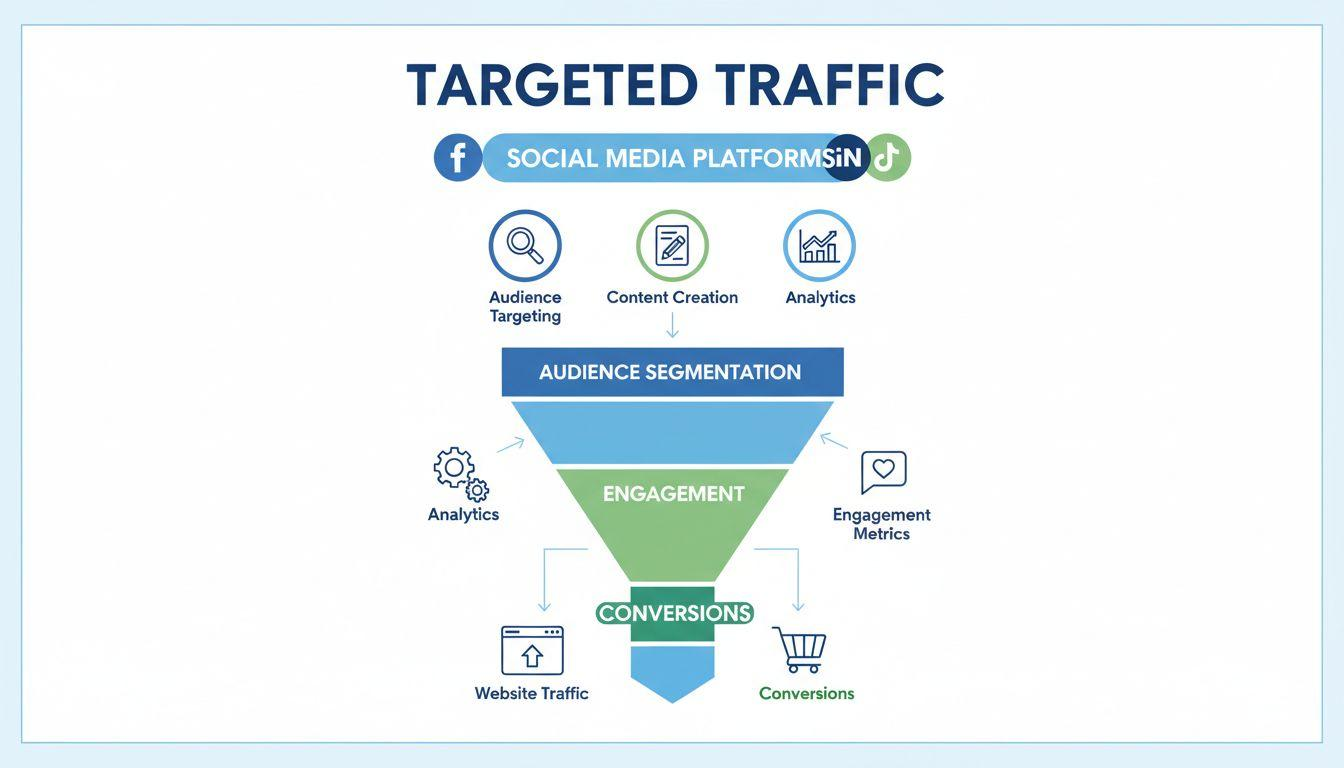
Social media advertising has changed—a lot.
What started as businesses simply trying to collect followers and “likes” has evolved into one of the most sophisticated advertising environments available to businesses of virtually any size.
Today, your customers aren’t just scrolling through social media. They’re discovering products, researching businesses, watching videos, reading reviews, comparing options, asking for recommendations and making purchasing decisions.
And businesses have more ways than ever to reach them.
Facebook and Instagram remain important advertising platforms, but they’re now part of a much larger digital ecosystem that includes LinkedIn, TikTok, YouTube and other platforms—each with different audiences, targeting capabilities and opportunities.
The opportunity isn’t simply to be on social media anymore.
The opportunity is to use it strategically.
10 Things Every Business Should Know About Social Media Advertising
1. Targeting is one of its biggest advantages.
Traditional advertising often starts with where an audience might be. Social advertising allows businesses to think much more specifically about who they’re trying to reach based on geography, demographics, interests, behaviors and other audience characteristics.
2. You don’t need a massive advertising budget.
Social advertising can work for businesses of all sizes. Campaigns can be scaled according to the audience, objective and available budget instead of requiring a large upfront media commitment.
3. One message doesn’t have to fit everyone.
Different customers have different needs. Social platforms allow businesses to run multiple campaigns, creative concepts and messages for different audiences at the same time.
4. Your creative matters—a lot.
Targeting can put an advertisement in front of the right person, but the creative still has to earn their attention. Strong visuals, video, headlines and messaging are increasingly important in crowded social feeds.
5. Mobile isn’t the future. It’s the default.
Your advertising, landing pages, forms and website experience need to be designed with the smartphone user in mind. A great advertisement that leads to a frustrating mobile experience can waste an otherwise effective campaign.
6. Social media can reach customers throughout the buying process.
Not everyone who sees an advertisement is ready to buy today. Social advertising can build awareness, generate interest, drive website traffic, reconnect with previous visitors and ultimately help move prospects toward becoming customers.
7. Organic content and paid advertising should work together.
Your business page shouldn’t exist only when you have something to sell. Useful, interesting and credible content helps establish your business as an expert in its category. Paid advertising can then amplify the right content to a larger, strategically selected audience.
8. You can actually measure what happened.
Reach, impressions, clicks, video views, leads, conversions and other performance metrics give businesses information that traditional advertising often cannot provide as precisely. The goal isn’t simply to collect data—it’s to use that data to make the next campaign better.
9. Testing beats guessing.
Different audiences. Different headlines. Different images. Different offers. Different calls to action.
Instead of deciding what should work based solely on instinct, businesses can test alternatives, evaluate the results and continuously improve their campaigns.
10. Social advertising works best as part of a larger marketing strategy.
This may be the biggest “secret” of all.
Social media shouldn’t operate in its own silo. Your social advertising should work alongside your website, search strategy, email marketing, content, promotions, branding and sales efforts.
The platform is a tool.
The strategy behind it is what produces results.
At Magnus, we’ve always believed successful marketing comes from looking at the entire picture—not chasing the newest platform, trend or marketing tactic.
Technology changes. Platforms change. Algorithms change.
Good marketing strategy doesn’t.
The businesses that get the most from social media are the ones that understand their customers, develop the right message, choose the right channels, measure what happens and continually adjust.
That’s not really a secret.
It’s good marketing.